
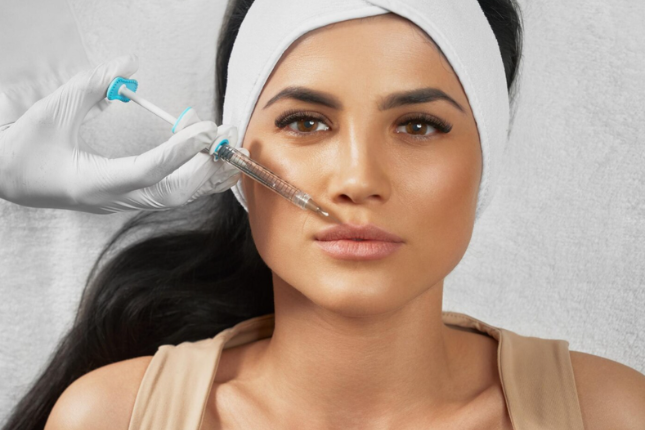
Your 30s are usually when the questions start: is that a permanent line now, or does it still go away when I stop frowning? Why do my cheeks look flatter than a few years ago? Botox and fillers are the two most commonly recommended answers — and they’re frequently confused as interchangeable, when they actually address two completely different aging mechanisms. Getting this distinction right (and understanding how it applies to Indian skin specifically) makes the difference between a natural refresh and an outcome that looks “off.” Botox Treatment in Hyderabad
Two Different Aging Problems, Two Different Solutions
Facial aging happens through several overlapping processes: repeated muscle movement creates expression lines, collagen and elastin decline making skin thinner and less resilient, and underlying fat pads and even bone structure gradually lose volume. Botox and fillers were developed for different parts of this problem — which is exactly why one can’t substitute for the other.
Botox: For Movement-Related Lines
Botox is a neuromodulator that temporarily relaxes the specific muscles responsible for expression lines. It doesn’t add anything to the face — it reduces the repetitive movement that creates and deepens lines over time.
Best for: Forehead lines, frown lines between the eyebrows, crow’s feet, and lines that appear only when you make an expression (these are called “dynamic” lines — the ones that are visible even at rest are “static,” and Botox is less effective on those alone).
Fillers: For Volume Loss
Dermal fillers are injectable gels that restore lost volume and support facial contours. As fat pads thin and shift starting in the late 20s through the 30s, cheeks can look flatter, under-eyes more hollow, and nasolabial folds (smile lines) more pronounced — none of which Botox addresses, because there’s no muscle movement causing it.
Best for: Restoring cheek volume, softening deep static lines, under-eye hollows, and lip or jawline contouring.
Why This Matters Specifically for Indian Skin
A few things about facial aging in Indian skin tend to shape which treatment (or combination) makes more sense in your 30s:
- Volume loss can show earlier relative to fine lines. Many Indian faces show early flattening in the cheeks and under-eye area before dynamic lines become prominent — which means fillers, not Botox, are sometimes the more relevant first step, contrary to what generic “anti-aging” content assumes.
- Skin thickness and pigmentation risk affect injection technique. Indian skin (Fitzpatrick IV–V) has a higher tendency toward post-inflammatory pigmentation from any injectable trauma, so technique and injector experience matter more than in lighter skin types — this is not a treatment to have done by someone without proper dermatological training.
- Sun exposure accelerates collagen loss. Given year-round UV exposure in most Indian cities, skin quality (thickness, elasticity) often needs as much attention as the specific lines or volume loss — meaning a good treatment plan usually includes skin-quality-focused options (like skin boosters or microneedling) alongside or before injectables.
How to Decide: A Simple Framework
- “My frown lines are there even when I’m not frowning, but my cheeks still have volume” → Start with Botox, focused on the expression lines.
- “My cheeks look flatter than a few years ago, or I look tired even when rested” → Fillers, focused on volume restoration.
- “I have both — early static lines and some volume loss” → A combination approach, which most dermatologists find gives the most natural, balanced result rather than over-treating one concern.
- “I don’t have visible lines yet, but I want to prevent them” → “Preventive” or low-dose Botox in the early-to-mid 30s is increasingly common, based on the idea that relaxing a muscle before a line becomes etched tends to need less product over time than starting after the line is established.
What Results Actually Look Like
Both treatments are temporary — Botox typically lasts 3–4 months, fillers 6–18 months depending on the product and area. Neither is a one-time, permanent fix; ongoing treatment every few months (Botox) or 6+ months (fillers) is the norm, not a sign something went wrong.
Done well, neither should look obviously “done.” The goal in your 30s is usually subtle — softened lines and refreshed volume, not a visibly changed face. This is where injector skill matters more than the product itself.
Safety Considerations
- Confirm the product used (Botox and fillers should be FDA-approved/CDSCO-approved formulations, not unbranded alternatives)
- Ask about the injector’s qualifications — this should be performed by a dermatologist or appropriately trained medical professional, not a beautician
- A proper consultation should assess your specific facial anatomy and ageing pattern before recommending a treatment, not default to whichever is being promoted that month
The Derm Aura Approach
At Derm Aura Skin & Hair Clinic, Banjara Hills, Dr. Suma Divya assesses whether your concern is primarily dynamic lines, volume loss, or both, before recommending Botox, fillers, or a combined approach — with technique calibrated for Indian skin’s specific pigmentation and thickness considerations.
Frequently Asked Questions
Should I get Botox or fillers first in my early 30s? It depends on what you’re seeing — if it’s mainly expression lines (forehead, frown lines), Botox is usually the starting point. If it’s flattening or hollowing (cheeks, under-eyes), fillers address that more directly. A consultation can clarify which applies to you.
How long do Botox and fillers actually last? Botox typically lasts 3–4 months; fillers generally last 6–18 months depending on the product and treatment area.
Can Botox and fillers be combined in one visit? Yes, this is common and often gives more balanced, natural results than either treatment alone, since they address different aging mechanisms.
Is it safe to start Botox in your early 30s if I don’t have visible lines yet? Many dermatologists support low-dose “preventive” Botox in the early-to-mid 30s for people prone to deep expression lines, though it’s not necessary for everyone — this is worth discussing individually rather than following a generic age rule.
Are Botox and fillers riskier for Indian/darker skin tones? The treatments themselves aren’t inherently riskier, but darker skin types have a higher tendency toward post-inflammatory pigmentation from any injection trauma, which makes injector experience and technique especially important.
Leave a Reply