
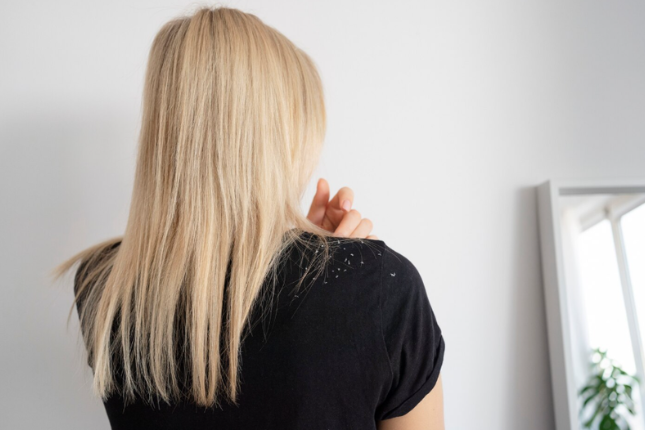
Flaky, itchy scalp is one of the most common reasons people search for a dermatologist and one of the most commonly self-misdiagnosed. Most of the time, it’s ordinary dandruff and clears up with the right shampoo. But a meaningful number of people treating “stubborn dandruff” for months are actually dealing with scalp psoriasis, which needs a completely different approach. Here’s how to actually tell them apart. Best Dandruff Treatment Doctors in Hyderabad
The Core Difference
Dandruff is caused by Malassezia, a yeast that lives naturally on everyone’s scalp. When it overgrows — often triggered by excess oil, hormonal changes, or reduced washing frequency — it speeds up skin cell turnover, producing flakes. It’s a scalp-specific, largely cosmetic condition.
Scalp psoriasis is a chronic autoimmune condition, not an infection. The immune system mistakenly attacks healthy skin cells and tells them to regenerate far faster than normal, producing thick, built-up plaques. It’s often part of a broader psoriasis pattern that can appear elsewhere on the body, not just the scalp.
They can look similar at a glance — both cause flaking and itching — but the underlying mechanism, appearance, and treatment are genuinely different.
Side-by-Side Comparison
| Dandruff | Scalp Psoriasis | |
| Flake appearance | Loose, fine, white-to-yellow, often greasy | Thick, silvery-white plaques, more firmly attached |
| Scalp appearance underneath | Mild redness, oily patches | Raised, well-defined red/violet/brown patches with sharp edges |
| Itch quality | Present but usually mild | Often more intense, sometimes with soreness or a burning sensation |
| Where it appears | Scalp, sometimes eyebrows or facial hair | Scalp, often extending past the hairline to forehead, ears, or neck |
| Bleeding when scratched | Uncommon | Possible — pinpoint bleeding when plaques are scratched or lifted |
| Spreads beyond scalp | No | Often yes — elbows, knees, or nails may also be affected |
| Nail changes | None | Pitting or yellow discoloration possible |
| Typical course | Comes and goes, often resolves with anti-dandruff shampoo | Chronic, flares and remits over months or years |
| Response to OTC shampoo | Usually improves within 2–3 weeks | Often persists or only partially improves |
A Simple Way to Check
- Look at the flake itself. Loose and oily = more likely dandruff. Thick, silvery, and stuck to the scalp = more likely psoriasis.
- Check for a defined edge. Psoriasis patches tend to have sharp, raised borders. Dandruff-related redness is more diffuse and blends into surrounding skin.
- See where else it shows up. Flaking limited strictly to the scalp leans dandruff. Similar patches on elbows, knees, lower back, or nail changes strongly suggest psoriasis.
- Track your response to treatment. If a proper anti-dandruff shampoo (zinc pyrithione or ketoconazole-based, used consistently for 2–3 weeks) doesn’t meaningfully help, that’s a signal to see a dermatologist rather than switching shampoos again.
Why Getting This Right Matters
Treating scalp psoriasis as if it were dandruff usually means months of frustration with over-the-counter shampoos that were never going to address an autoimmune process. Meanwhile, undiagnosed scalp psoriasis that flares repeatedly can contribute to hair thinning in the affected areas, and untreated flares tend to worsen with common triggers like stress, dry weather, or scratching.
Conversely, dandruff doesn’t need — and won’t particularly respond to — the prescription-strength treatments used for psoriasis. Getting the diagnosis right the first time saves both time and unnecessary treatment.
Treatment Approaches
For dandruff:
- Medicated shampoos containing zinc pyrithione, ketoconazole, or selenium sulfide
- Reducing scalp oil buildup with appropriate wash frequency
- Addressing any underlying triggers (hormonal changes, product buildup)
For scalp psoriasis:
- Prescription topical treatments — often corticosteroids, vitamin D analogues, or coal tar-based formulations
- Medicated shampoos to help lift plaques, used alongside — not instead of — prescribed treatment
- Management of known triggers: stress, skin injury, certain infections
- For more extensive or resistant cases, systemic or advanced dermatological treatment options
When to See a Dermatologist
- Flaking or itching hasn’t improved after 2–3 weeks of consistent anti-dandruff shampoo use
- You notice thick, raised patches with defined edges
- Scaling extends beyond the hairline to the forehead, ears, or neck
- You have similar patches elsewhere on the body, or nail changes
- Scratching causes bleeding or the area feels sore rather than just itchy
The Derm Aura Approach
At Derm Aura Skin & Hair Clinic, Banjara Hills, Dr. Suma Divya examines the scalp directly to distinguish dandruff, seborrhoeic dermatitis, and scalp psoriasis before recommending treatment — since each requires a different approach, and getting the diagnosis right the first time avoids months of trial and error.
Frequently Asked Questions
Can scalp psoriasis be mistaken for severe dandruff? Yes, this is a common misdiagnosis, especially in milder cases. The clearest signs of psoriasis are thicker, more firmly attached scales, sharply defined patches, and flaking that extends past the hairline.
Does scalp psoriasis cause hair loss? Psoriasis itself doesn’t usually destroy hair follicles, but repeated flares, inflammation, and scratching can contribute to temporary hair thinning in affected areas. Hair typically regrows once the flare is controlled.
Is scalp psoriasis contagious? No. It’s an autoimmune condition, not an infection, so it cannot be spread to others.
Can dandruff turn into scalp psoriasis? No — they’re different conditions with different causes. However, both can coexist, and it’s possible to have psoriasis alongside ordinary dandruff, which can make self-diagnosis harder.
What if anti-dandruff shampoo isn’t working at all? If symptoms persist beyond 2–3 weeks of consistent use, it’s worth getting a dermatologist’s assessment rather than trying more over-the-counter products — persistent symptoms are the main flag for scalp psoriasis or another underlying condition.
Leave a Reply