
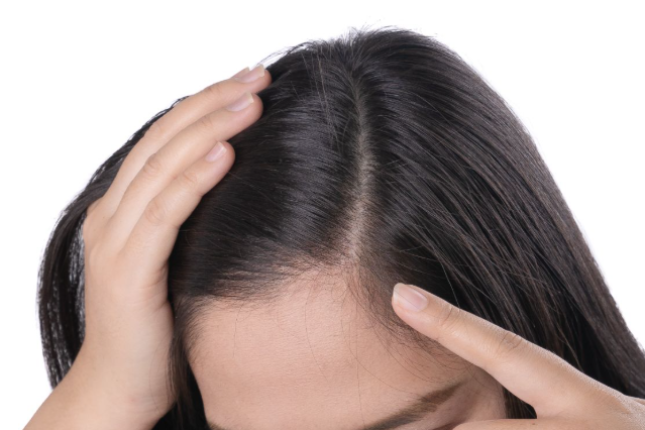
Somewhere in their early-to-mid 30s, a lot of women notice the same thing: the ponytail feels thinner, the centre parting looks wider, and there’s more hair in the shower drain than there used to be. It’s easy to dismiss it as stress or “just getting older,” but hair thinning in your 30s almost always has an identifiable cause — and most causes are manageable once correctly diagnosed. Here’s what’s actually going on, and which non-surgical treatments genuinely help. Advanced Hair Treatment in Hyderabad
Why 30 Is a Common Turning Point
Estrogen plays a protective role in keeping hair follicles in their active growth phase for longer. As women move through their 30s, hormonal fluctuations — from lifestyle stress, pregnancy and postpartum changes, or the early stages of perimenopause — become more common, and hair follicles are particularly sensitive to these shifts. The result is usually gradual, diffuse thinning rather than sudden bald patches, which is exactly why it often goes unnoticed until it’s fairly advanced.
The Most Common Causes
1. PCOS (Polycystic Ovary Syndrome)
PCOS is one of the leading hormonal causes of hair thinning in Indian women, affecting a significant share of women of reproductive age. Elevated androgen levels can miniaturise hair follicles, leading to thinning at the crown and a widening centre part — often alongside other signs like acne, irregular periods, or increased facial/body hair.
2. Thyroid Dysfunction
Both an underactive thyroid (hypothyroidism) and an overactive one (hyperthyroidism) disrupt the hair growth cycle. Thyroid-related hair loss tends to be diffuse across the whole scalp rather than concentrated at the crown, and it’s often accompanied by fatigue, weight changes, or skin dryness.
3. Iron Deficiency
Low ferritin (the body’s iron storage protein) is one of the most common nutritional causes of hair thinning in Indian women — driven by heavy menstrual cycles, vegetarian diets low in absorbable iron, and pregnancy. Hair can thin noticeably even before iron deficiency becomes severe enough to cause other symptoms.
4. Telogen Effluvium (Stress-Related Shedding)
A physically or emotionally stressful event — illness, major life stress, crash dieting, surgery, or childbirth — can push a large number of follicles into the resting (telogen) phase at once. This causes noticeable diffuse shedding roughly 2–3 months after the triggering event, and usually improves once the underlying stressor resolves.
5. Postpartum Hair Loss
Elevated estrogen during pregnancy keeps more hair in the growth phase than usual. After delivery, estrogen drops sharply, and all that extra hair enters the shedding phase at once — typically 2–4 months postpartum. This is one of the most common (and most temporary) causes of female hair thinning, but it can still benefit from supportive treatment.
6. Female Pattern Hair Loss (Genetic)
Similar in mechanism to male pattern baldness, this is a hereditary sensitivity of hair follicles to hormones, causing progressive thinning at the crown and part line. It tends to run in families and, unlike telogen effluvium, doesn’t resolve on its own — it needs ongoing management.
Early Signs Worth Acting On
- A centre part that looks noticeably wider than it used to
- Reduced ponytail thickness compared to a few years ago
- More visible scalp under bright light
- Increased strands on your pillow, brush, or in the shower
Normal daily hair shedding is around 50–100 strands — the concern is a sustained increase in shedding or a visible drop in density, not the occasional bad hair day.
Getting the Diagnosis Right
Because thinning after 30 has several overlapping causes, treatment that skips diagnosis rarely works long-term. A proper workup typically includes:
- Trichoscopy (scalp and follicle examination)
- Blood tests: thyroid panel (TSH, T3, T4), ferritin/iron studies, and — where PCOS is suspected — a hormonal panel
- A menstrual and medical history review
Non-Surgical Treatment Options
Addressing the Root Cause
- Thyroid or PCOS management — often in coordination with an endocrinologist or gynaecologist, alongside dermatological care
- Iron and nutrient correction — supplementation guided by actual blood levels, not guesswork
- Stress-related shedding — usually resolves within 6–9 months once the trigger passes, sometimes supported by in-clinic treatment to speed recovery
In-Clinic Treatments
- PRP (Platelet-Rich Plasma): supports follicle health and is often used for early diffuse thinning
- GFC (Growth Factor Concentrate): a more concentrated option for moderate thinning or when PRP alone hasn’t been enough
- Medical therapy: topical or oral treatments prescribed based on the specific diagnosis — not a one-size-fits-all product
Combination approaches — correcting the underlying cause and supporting follicles in-clinic — consistently give better results than either approach alone.
What to Expect, Realistically
Hair growth is slow by nature. Even with the right treatment, most women notice reduced shedding within 2–3 months and visible density improvement over 6–12 months. Thinning caused by a treatable trigger (postpartum, iron deficiency, acute stress) tends to respond faster and more completely than thinning with a genetic component, which is managed rather than fully reversed.
How Derm Aura Approaches Female Hair Thinning
At Derm Aura Skin & Hair Clinic, Banjara Hills, Dr. Suma Divya — a dermatologist and trichologist with over a decade of experience — evaluates female hair thinning with a full trichoscopic assessment and relevant blood work before recommending a treatment plan, whether that’s medical management, PRP/GFC, or a combination approach.
Frequently Asked Questions
Is hair thinning after 30 normal for women? Some gradual change is common, but a noticeably widening part, reduced ponytail thickness, or increased shedding usually points to an identifiable and treatable cause — it’s worth getting evaluated rather than assuming it’s simply age.
Can PCOS-related hair loss be reversed? It can often be significantly improved once the underlying hormonal imbalance is managed, combined with supportive in-clinic treatment. Full reversal varies by individual and how early treatment starts.
How do I know if my hair loss is stress-related or hormonal? Stress-related shedding (telogen effluvium) usually follows a specific triggering event by 2–3 months and improves on its own over several months. Hormonal thinning tends to be more gradual and persistent, and blood tests can help distinguish the two.
Do I need blood tests before starting hair fall treatment? Ideally, yes. Thyroid, ferritin, and — where relevant — hormonal panels help identify the actual cause, so treatment isn’t guesswork.
Is PRP or GFC effective for hormonal hair thinning? Both can support follicle health and improve density, but they work best alongside treatment of the underlying hormonal cause rather than as a standalone fix.
Leave a Reply